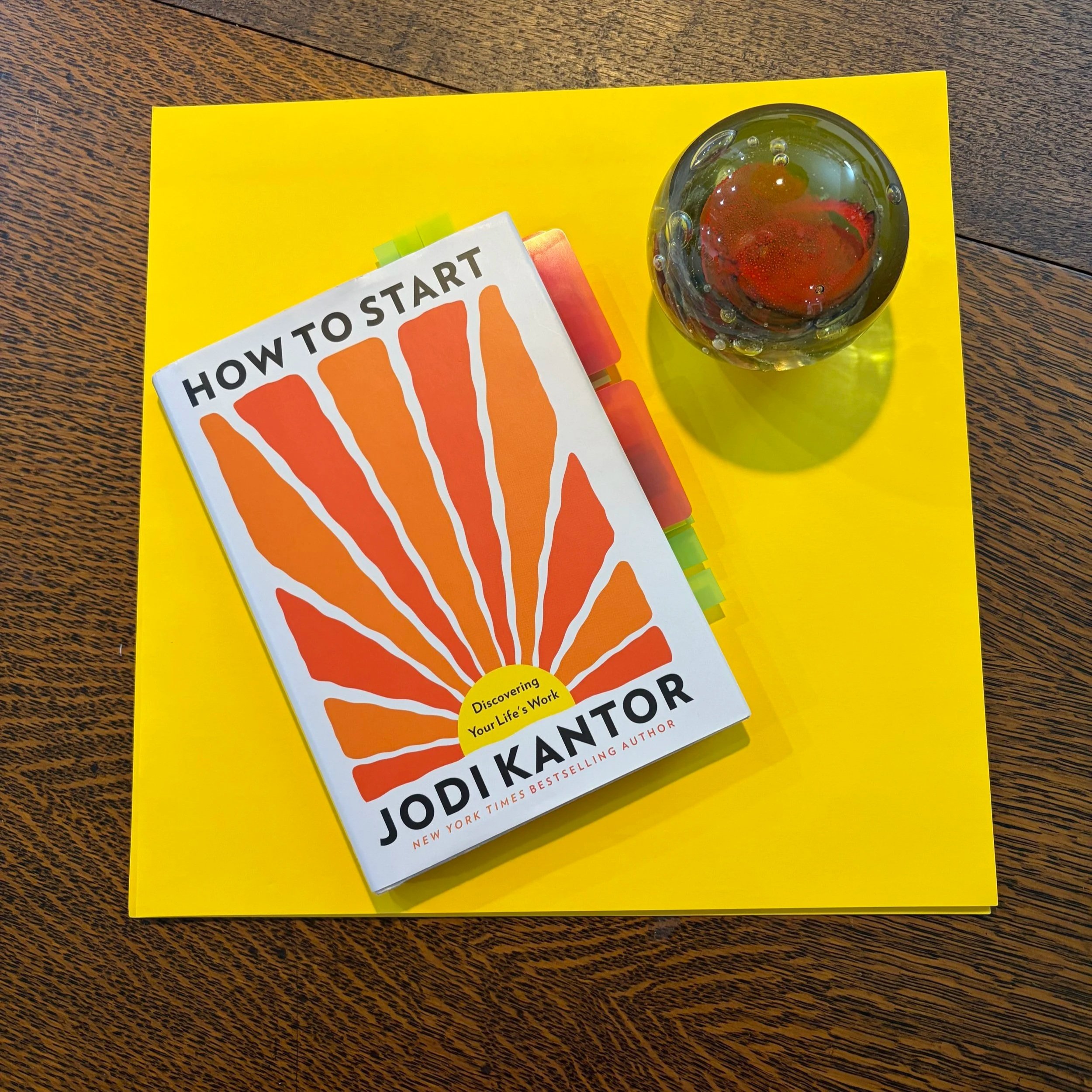
How to Start: Discovering Your Life’s Work
by Jodi Kantor
I usually smile fondly, but keep walking right by, as I pass books that are (rightfully or not) categorized as “gifts for grads” in the bookstore. It’s usually not the kind of book I’m looking to pick up. How to Start by Jodi Kantor is, on its face, a book I would typically pass by; it’s an expanded version of a commencement speech, after all! However, when I listened to the episode of NPR’s Book of the Day podcast featuring Kantor discussing her book, I was heartened by her focus on developing a craft and the book’s applicability to talent at all levels and points in finding their life’s work.
The book is well-named. It’s not a “how-to” manual for lifelong career development; rather, it emphasizes discovery and gives clear prompts for starting (or re-starting) by (a) assessing the world’s needs that the reader may want to meet through their work and (b) recognizing how the reader can develop their knowledge and skills as a craft to respond to those needs. This bias toward taking action—Kantor even has a section called “find by starting”—is a mindset-shifter that can help talented folks get unstuck in this very sticky-feeling moment. It’s instructive for folks starting their careers for the first time, and it’s propulsive for folks starting again (as most of us will do, taking multiple new roles, and careers, across our lifespan according to the World Economic Forum, US Bureau of Labor Statistics, and others).
In this economic and job market, my coaching clients tell me that starting (again) feels even harder than before. It’s no wonder: we have high numbers of qualified jobseekers, increasingly screened by AI, for low numbers of open opportunities (in most industries). It can be tough to feel sufficiently qualified to pursue desirable opportunities, and I’ve seen many people disqualify themselves even before starting. Mo and I also explore this pattern in our conversation about “How not to prematurely disqualify ourselves from a new job” on Paperweight’s Substack. We talk about being accurate in representing our knowledge, skills, expertise, and experience. But we won’t be able to represent ourselves accurately if we haven’t taken the time to discover how what we do, or want to do, matches with what the world needs.
At one point in the text, Kantor addresses the tough market and encourages readers to go back to the core of what we can do, saying “if you still become the person who applies for four hundred jobs with no response, see if craft and need might help.” In other words, go back to what you do, or could do (craft), that matches a real problem or improvement (need) you’d like to work on for people.
To actually do a job and hone a craft to drive impact, skill-building matters more than gaining credentials or having perfect-match experience. Sure, many, many job postings require specific levels of education or certifications. As jobseekers and talent seekers alike, we must remember that those designations are proxies for the skills and craft we need to meet the charge of a given role. While it’s not a zero-sum game, Kantor’s message is more focused on getting good at what the world needs over collecting proof points. And isn’t that both right and refreshing?
Read This Book If You Want or Need:
An antidote to the flurry of bad-news articles about the current and future state of the workforce and career opportunities for humans
To (re)acquaint yourself with the idea of craft, and having and building a craft, as the core of a career
A career pep talk that comes with tangible steps to take, illustrated by real stories and examples from the author and many others across varied industries and careers